ISSUE 03 AI
Essays13 MIN READ
Do a Little Dance for Me
For two centuries, companies have tried to keep what workers know while reducing how much they need the workers themselves. Generative AI extends that old project across knowledge work. The danger is not only that the machine may replace the worker. It is that the machine can become the standard the worker is asked to meet.
The ideal worker is intelligent but not opinionated, creative but not possessive, experienced but not expensive. They take initiative without acquiring authority, improve without expecting promotion, and remain available without getting tired. They know enough to surprise management, but never enough to become difficult to manage.
For most of industrial history, this worker did not exist. The problem, from management’s point of view, was not the worker’s skill. It was that the skill came attached to someone. Knowledge belonged to a person who could leave. Creativity came with ambition. Experience made people more expensive. Judgment made them capable of disagreement. Productive capacity arrived bundled with a body, a career, a family, a salary expectation, and a life that did not belong to the company.
Generative AI offers an unusually attractive way to loosen that bundle. It can write, summarize, code, research, classify, imitate, and make increasingly sophisticated judgments without entering an employment relationship with the company using it. Its output can be requested, rejected, regenerated, multiplied, and purchased through the same interface.
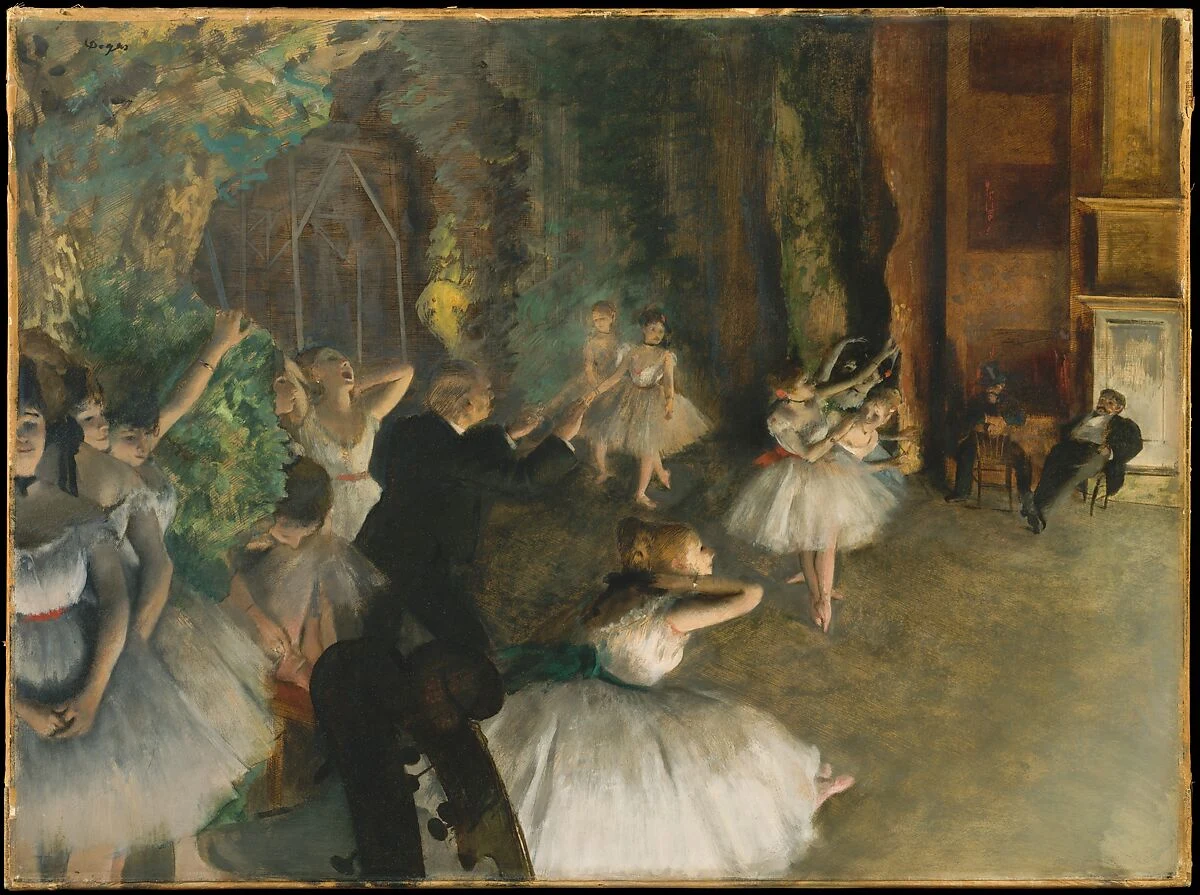
Write this shorter. Make it less corporate. Give me five more. No, not like that. Try again. Do a little dance for me.
The remarkable thing is not simply that machines can now perform cognitive work. Capitalism has been reorganizing human labor around technology for centuries. The more interesting possibility is that capacities once difficult to separate from the people who possessed them are becoming easier to purchase independently of those people. That possibility has a history.

How to Remove the Worker From the Work
The history of management can be read, in part, as a sequence of attempts to solve the same problem: how do you preserve productive capacity while reducing dependence on the particular worker who possesses it? Three answers recur:
Divide the skill
Charles Babbage saw the economic advantage clearly in 1832. If a craft could be broken into smaller operations, a manufacturer no longer needed to pay a highly skilled worker to perform every part of it. The firm could purchase only the level of skill required at each stage. Babbage described the advantage with unusual precision: division made it possible to apply “precisely that quantity of skill and knowledge” required for each process.1
The familiar interpretation is that specialization improves efficiency. The more important interpretation here is what happens to the worker. A craftsperson once arrived as an inconvenient bundle of planning, judgment, execution, knowledge, and experience. Division made the bundle decomposable. The employer no longer had to purchase the whole collection of capacities embodied in one person.
The logic should sound familiar. A company once needed an analyst because SQL, research, visualization, writing, and business judgment arrived together in an analyst. Generative AI makes it increasingly possible to ask which pieces of that bundle actually require the analyst.
Capture the knowledge
Frederick Winslow Taylor believed the factory floor contained too much knowledge that management did not possess. Scientific management therefore sought to observe workers’ methods, measure them, formalize them, and move the planning of work elsewhere. Taylor stated the objective bluntly: “All possible brain work should be removed from the shop” and concentrated in a planning department.2
Efficiency was part of the point. Dependence was another. If the best way to perform a job existed only inside an experienced worker’s head, losing that worker meant losing part of the productive system. Once the method became a process owned by the organization, the knowledge could remain after the person left.
Harry Braverman later made this managerial logic central to labor-process theory. Taylorism separated conception from execution. Management accumulated and codified knowledge about the labor process, while more of the worker’s role became executing a process whose logic had been defined elsewhere.3
The planning department eventually found better places to live. Correct procedures moved into software. Customer conversations moved into scripts. Scheduling moved into algorithms. Performance moved into dashboards. Warehouse routes moved into optimization systems. Each transfer could make production safer, cheaper, more consistent, or easier to scale. It could also make the organization less dependent on the individual worker who once knew how the system worked.
Embed knowledge in capital
Marx noticed this possibility while writing about machinery. In the Grundrisse, he described accumulated scientific and social knowledge becoming embodied in the productive system as “the power of knowledge, objectified.” The important idea was not that machines literally think. It was that knowledge accumulated across society could confront the individual worker in the form of productive infrastructure owned by capital.4
Generative AI gives that old observation a strange new life. Industrial machinery embedded physical technique. Traditional software encoded procedures humans could specify in advance. Generative AI reaches into domains that were much harder to reduce to explicit instructions: what matters in this document, how this should sound, what a customer probably means, which explanation is plausible, what a competent first draft looks like, what should happen next. In other words, pieces of cognitive discretion are becoming portable.
A language model is not a container filled with human understanding, and its outputs should not be confused with a human mind. But these systems are built from enormous quantities of human-produced language, code, images, judgments, and feedback, then packaged into productive capabilities that can be accessed through a subscription or API.
There is an economic transformation hidden inside the technical one. Knowledge that is widely produced across society can return as privately controlled productive infrastructure. The firm does not need to employ every writer whose linguistic patterns contributed to the world it learned from, every programmer whose code helped establish conventions, or every worker whose feedback helped define what a useful response looks like. It purchases access to the resulting capability. Human knowledge becomes machine capability, sold as access to capital. Then capital returns to the workplace.
The Competition Comes Back
In April 2025, Shopify CEO Tobi Lütke told teams that before requesting additional headcount or resources, they should demonstrate why the desired work could not be accomplished using AI. He also asked employees to imagine autonomous AI agents as already being part of their teams.5
The important detail is not whether Shopify ultimately employs more or fewer people. It is the order of operations. Work needs to be done. First ask whether AI can do it. Then ask whether the existing team can do it with AI. Only after those possibilities are exhausted does another human employee need to be justified.
AI has moved from being a tool used by labor to being an alternative source of labor capacity. That shift changes the comparison. The machine does not need to become a complete substitute for a human employee. It only needs to perform enough pieces of the job that the company’s dependence on that employee falls. This is why the usual question, “Will AI take my job?”, may be too dramatic and too narrow.
AI does not have to replace you to weaken you.
An employee’s bargaining power depends partly on what happens if the relationship ends. If replacing someone requires months of recruiting, onboarding, training, and accumulated context, losing them is expensive. Their ability to leave gives weight to their ability to say no. If a smaller team with AI can absorb a meaningful share of the work, the employer’s fallback position improves even while the worker remains employed.
The machine therefore becomes a peculiar kind of competitor. When it works well enough for the task, it is fast, replicable, available on demand, and does not negotiate over the value it helps produce. The employer also participates in choosing the characteristics of that competitor. The company gets to design the competition.
Early labor-market evidence makes this possibility harder to dismiss as a thought experiment. A working paper by José Azar, Mireia Giné, and Javier Sanz-Espín, first posted in December 2025 and revised in August 2026, found that greater occupational exposure to generative AI was associated with lower wages and lower job-to-job mobility, with no statistically detectable employment change in the occupation-by-industry data they analyzed. The estimated wage effects were largest among junior workers. The authors also found evidence consistent with increased firm labor-market power in more exposed occupations. These results are early and observational, not proof that AI has already reorganized the labor market everywhere, but they suggest an important possibility: employment can remain relatively stable while the position of the employee deteriorates.6
A job can survive while the worker gets weaker. That distinction matters. If we measure AI’s effect on employment only by counting layoffs, we may miss changes in wages, mobility, bargaining power, workload, and the ability to refuse unreasonable demands. The worker can still have a desk, a salary, and a Slack account while becoming easier to replace. The reverse is possible too: AI can make scarce expertise more valuable or help a worker build a business outside the firm. The question is whose alternatives improve. And once the alternative exists, the benchmark can change even before replacement becomes realistic.
You Too
AI was supposed to save time. Sometimes it does. A randomized field experiment across 66 firms and 7,137 knowledge workers found that, in the second half of the six-month study, the 80 percent of workers given access who used the tool spent roughly two fewer hours on email each week and reduced work outside normal hours. The researchers did not detect changes in the quantity or composition of tasks from giving individual workers access to the tool.7
Another workplace produced a different result. In an eight-month ethnographic study of a roughly 200-person U.S. technology company, Berkeley researchers found employees using generative AI worked at a faster pace, took on a broader scope of tasks, and extended work across more hours of the day, often without management explicitly asking them to do so. The technology expanded what workers felt capable of taking on, and work expanded with it.8
These findings are not contradictory. They expose the real question: technology creates capacity, but organizations decide what happens to it. An hour saved can become an hour of leisure. It can become additional output, a shorter deadline, a broader job description, a smaller team, a better product, a lower price, or a higher profit. The technical achievement of saving the hour does not determine who receives it.
And expectations appear to be moving quickly. In ZipRecruiter’s 2026 employer survey, 57 percent of surveyed employers said AI had raised their baseline productivity expectations, while only 22 percent reported mandatory AI training for all employees. The same survey found that 35 percent expected AI to increase headcount. More hiring and a higher bar for each hire can coexist.9 Yesterday’s productivity gain becomes today’s capacity, and today’s capacity has a habit of becoming tomorrow’s baseline.
This process does not only make jobs faster. It can make them wider. OpenAI’s July 2026 analysis of more than 800,000 work-related messages from U.S. ChatGPT users found that 43.5 percent of occupation-specific messages concerned tasks associated with an occupation other than the user’s own. Including generic work such as email and scheduling, the share was 16.8 percent of all work-related messages. These are patterns in a selected sample of AI use, not measurements of completed work or proof that AI caused job descriptions to expand.10
That can be empowering. A worker can solve a problem without waiting for another department, learn a new capability, prototype an idea, or exercise more independence. It can also quietly redraw the job.
A marketer who can analyze data does not necessarily get Friday afternoon back. Marketing can simply acquire data analysis. A designer who can draft copy does not necessarily become less busy. The definition of design can expand. A manager who can use agents to produce research, analysis, and first drafts may become extraordinarily productive. The organization may also begin asking why that manager needs as many junior employees.
This exposes another weakness in the simple “AI replaces tasks” framework. Some low-level tasks are not only outputs. They are training. A junior analyst cleans data, checks numbers, drafts slides, reruns an analysis, gets something wrong, watches a senior catch the error, and gradually learns what an error looks like before anyone catches it. A junior programmer fixes boring bugs and learns why systems fail. An assistant drafts work that will be rewritten and slowly acquires judgment about what survives the rewrite. The junior employee may be inefficient precisely because the junior employee is still becoming the senior employee.
From the perspective of an individual firm, replacing some of that work with AI can be perfectly rational. Why pay three beginners to perform tasks one experienced employee with AI can complete faster? From the perspective of the labor market, however, there is a problem. Senior employees do not simply appear. Industries manufacture expertise by tolerating periods in which inexperienced people are inefficient.
A company can have an incentive to buy experience rather than produce it. If enough companies make the same calculation, the career ladder begins to lose its lower rungs. The firm optimizes the quarter and eats the apprenticeship.
A Better Commodity
Karl Polanyi called labor a “fictitious commodity.” Unlike wheat or steel, human activity is not originally produced for sale on a market. Treating labor as a commodity therefore requires pretending that something inseparable from human life can behave like an ordinary object of exchange.11
The fiction never becomes complete. A company purchases labor power, but the capacity remains attached to a human being. The employee goes home. The employee needs rest. The employee develops relationships, aspirations, expertise, and outside opportunities. The employee can decide that the exchange is no longer worth it.
This is why generative AI is economically more interesting than the phrase “artificial intelligence” suggests. What if parts of cognitive labor can finally behave more like ordinary commodities? Writing capacity can be available at 3 a.m. Analysis can be duplicated. A model can be deployed across teams without separately recruiting each instance. The capability can improve without the individual user conducting a promotion review. It can move between tasks without renegotiating a job description.
This does not make AI a worker in the human sense. It makes the distinction more unsettling. It provides some of the productive capacities employers historically purchased through workers, but in a form much closer to capital. Capability without a career. Expertise without seniority. Output without a claimant to the output. That is not simply an engineering achievement. It changes the employer’s alternatives.
Who Owns the Hour?
It would be easy to make the villain of this story a greedy CEO. It would also make the argument weaker, because no unusually cruel executive is required. Suppose AI makes a company 20 percent more productive. One firm can keep output constant and shorten the working week. Another can hold working hours constant and increase output. Another can reduce headcount. Another can lower prices, increase quality, raise wages, or increase profits. Most will choose some mixture.
The technology creates a productivity dividend. It does not specify its distribution. That is shaped by ownership, bargaining power, competition, and the rules under which firms operate.
This does not mean every gain must mechanically go to shareholders, or that technology can never improve workers’ lives. History contains higher wages, shorter working days, safer factories, new professions, more skilled jobs, and enormous improvements in living standards. Technologies do not produce one inevitable labor outcome.
But capitalist firms operate under a particular pressure. They compete. A company that converts AI into more output or lower costs can put pressure on competitors to do the same. Once one firm discovers that eleven people with AI can produce what previously required twelve, another firm has to explain why it still employs twelve. What begins as an optional productivity gain can become an industry standard. This is why “greed” is most useful here not as a personality trait, but as a system of incentives.
Marx distinguished between extending work and increasing productivity within the same working time as different ways of increasing surplus. The deeper point is simple: labor-saving technology creates the possibility of free time, but there is nothing inside the technology itself that gives the saved time to the worker. Marx could imagine machinery producing extraordinary abundance and disposable time. He could also see why, under capital accumulation, those same productivity gains could return to workers as intensified production instead.12 This is the question hidden beneath nearly every promise that AI will “give us time back.”
Who is us? When AI saves an hour, who owns the hour?
The pattern is not that every new technology makes workers less skilled. It does not. The pattern is that capital has a recurring incentive to make valuable productive capacity less dependent on the particular people who currently possess it.
Socially produced knowledge can return to the workplace as privately controlled productive capacity. Individual workers are asked to use it, compete with it, and increasingly justify the parts of themselves it cannot yet provide.
This is why counting disappearing jobs is insufficient. A surviving job can become wider, worse paid, or harder for a beginner to enter, while the employer becomes less afraid of losing the person doing it. The machine never had to take your job. It only had to make your employer less afraid of losing you.
For two centuries, management has tried to preserve what workers can do while reducing how much production depends on the workers themselves. Generative AI does not complete that project, and it may never come close. But it pushes the ambition into parts of human capability that were previously much harder to detach, standardize, and buy on demand.
We taught the machine how to dance. It learned quickly. It works cheaply, scales beautifully, and rarely complains. Then someone looked at the rest of the office.
Do a little dance for me.
Notes
Charles Babbage, On the Economy of Machinery and Manufactures (1832), chapters 19–20, especially paragraphs 241 and 250. The quotation explicitly concerns division in both mechanical and mental operations. Source. ↩
Frederick Winslow Taylor, Shop Management (first published 1903; linked 1911 edition), on concentrating planning in a separate department. Source. ↩
Harry Braverman, Labor and Monopoly Capital (1974), chapter 4, “Scientific Management,” on separating conception from execution. Link: the publisher’s book page. Source. ↩
Karl Marx, Grundrisse (1857–58), “Fragment on Machines,” on objectified knowledge, fixed capital, and disposable time. The link contains the quoted passage. Source. ↩
Tobi Lütke’s April 7, 2025 memo to Shopify staff. Contemporary reporting links the publicly posted memo and confirms the requirement to justify additional headcount against AI capabilities. Source. ↩
José Azar, Mireia Giné, and Javier Sanz-Espín, The Wage Effects of Generative AI. Working paper dated December 2025; SSRN revision August 21, 2026. Observational exposure estimates; the employment result is specific to the data analyzed, not a finding of zero economy-wide effect. Source. ↩
Eleanor Wiske Dillon, Sonia Jaffe, Nicole Immorlica, and Christopher T. Stanton, Shifting Work Patterns with Generative AI, version 4 (November 13, 2025). Randomized access across 66 firms and 7,137 workers; the two-hour estimate concerns users among those given access in the second half of the six-month experiment. Source. ↩
Xingqi Maggie Ye and Aruna Ranganathan, ongoing workplace research, described by UC Berkeley Haas in February 2026. Eight months of observation and interviews in one approximately 200-person company; a qualitative case, not a representative estimate of all workplaces. Source. ↩
ZipRecruiter Economic Research, More Jobs, Higher Bar: The 2026 AI Employer Report (July 29, 2026). Online employer survey fielded June 11–18. These percentages describe respondents’ reported expectations and training policies. Source. ↩
OpenAI Economic Research, Work at the Frontier: How AI Is Expanding What People Do at Work (July 2026), especially methodology on page 12. Individual-account messages were linked to self-reported ChatGPT Business roles across eight occupation groups. The sample is not representative of the U.S. workforce; messages do not establish task completion, quality, or causal changes. Source. ↩
Karl Polanyi, The Great Transformation (1944), chapter 6, on labor, land, and money as fictitious commodities. Labor is human activity rather than something originally produced for sale. Source. ↩
Karl Marx, Capital, volume I, chapter 16, on absolute and relative surplus-value. The discussion of disposable time also draws on the Grundrisse passage linked in note 4. Source. ↩